
Choosing a Kayak
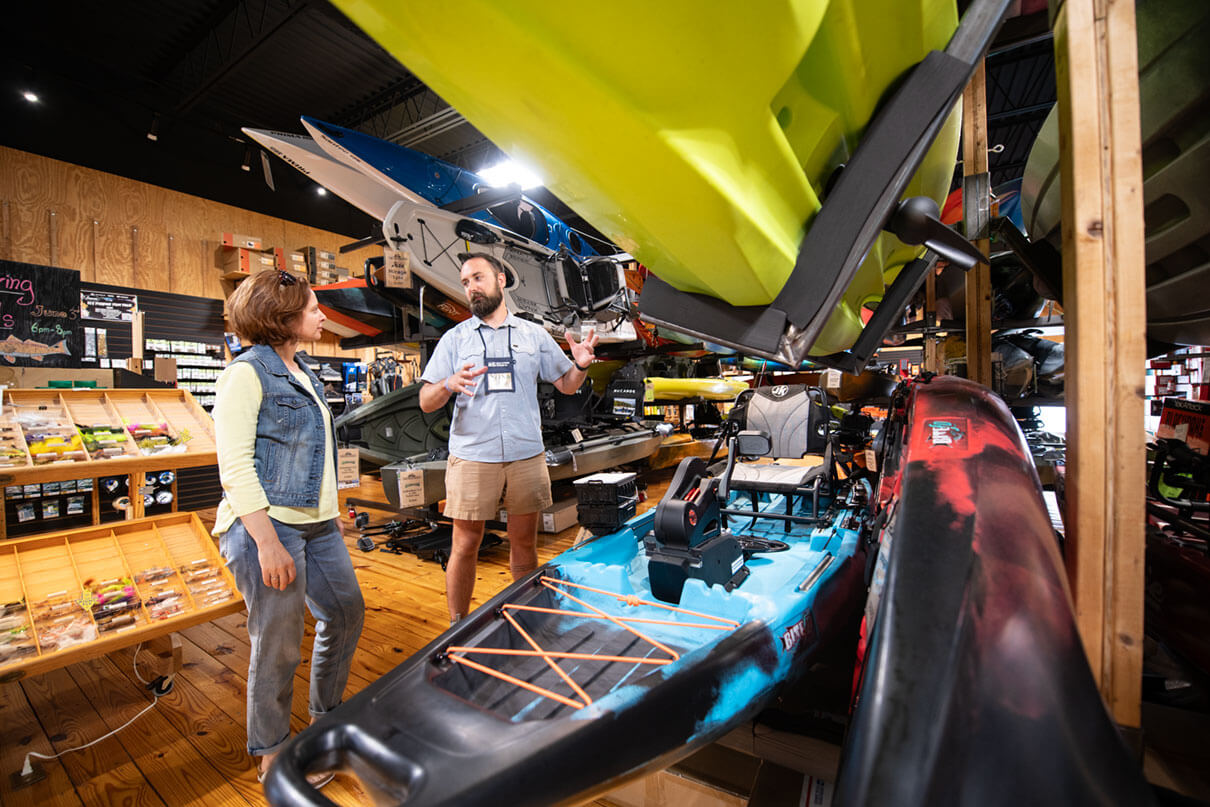
The biggest decision and the biggest investment is purchasing a fishing kayak. Choosing the best fishing kayak is critical to comfort, safety and success. Many anglers are tempted to buy a cheap kayak to get started. “When you are ready to step up, come and see me,” Dean Lokey, owner of OC KAYAK in Ocean City, Maryland, says. Many of Lokey’s customers bought a “starter” kayak only to step up to a better boat.
Chase Christianson, manager of Great Outdoor Provision Company in Virginia Beach, puts it this way, “Buy once, cry once.” He explains an angler is better off spending more money upfront for a quality kayak than buying a bargain boat and later upgrading. “The biggest problem is a new angler who has a bad initial experience and quits kayak fishing to take up golf.”
Christianson and Lokey encourage anglers to choose a kayak from a reputable kayak company with a pedigree of design, durability and versatility. Christianson says a good kayak uses premium materials and sturdy construction. “The plastic is heavier and the boat has a solid feel,” he explains. He looks for a quality seat, rudder system, rod holders, hatches and gear tracks. A fishing kayak is more than a plastic shell—there are dozens of features to improve function and comfort.
A quality kayak is designed and built by people who fish from a kayak. The best kayak companies use professional kayak anglers to test and develop their products. The result is a kayak that performs better with parts that will last the test of time. The same designs trickle down to the company’s less expensive models.
For anglers on a tight budget, bargain boats offer an affordable way to get on the water and into the action. For an angler interested in getting his feet wet without jumping into kayak fishing headfirst, a budget-friendly kayak will provide a taste of the experience. Lokey and Christianson say many of their customers start simple and then come to their shop to upgrade.
Transportation and Storage
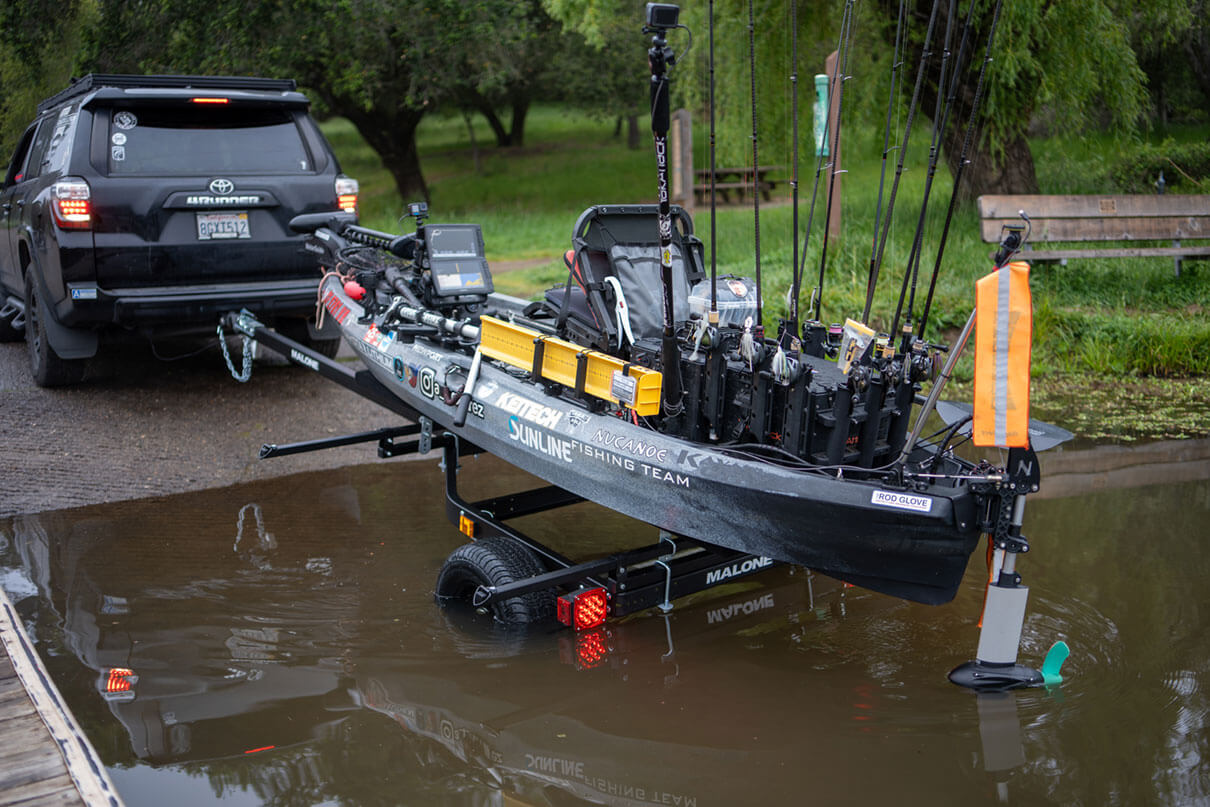
The final question can be a deal-breaker: how will you transport and store the kayak? Christianson puts kayaks in three categories: car-top, truck bed and trailer. “A kayak under 80 pounds rides flat on roof racks,” he says. A kayak from 80 to just over 100 pounds can be wrestled into a truck bed. “Use a bed extender for a kayak over 10 feet long,” he recommends. Heavier, wider and bulkier kayaks, especially motorized kayaks, require a small kayak trailer. “A lightweight trailer is a great idea for cars and SUVs,” Christianson adds.
Most fishing kayaks are too big and awkward for an angler to carry without a small cart. “Be sure to match the cart cradles to the hull shape,” Christianson adds. The kayak needs to be stored on its side or standing on end to protect the plastic from warping. “Be sure there is room in the yard for the boat,” he says.
To narrow the kayak choices down to the perfect fit, filter through fishing needs, propulsion preference, transport, storage and rigging potential. Lokey says, “There are a lot of options and one boat will match the angler’s needs.”
Paddle, Pedal or Motor
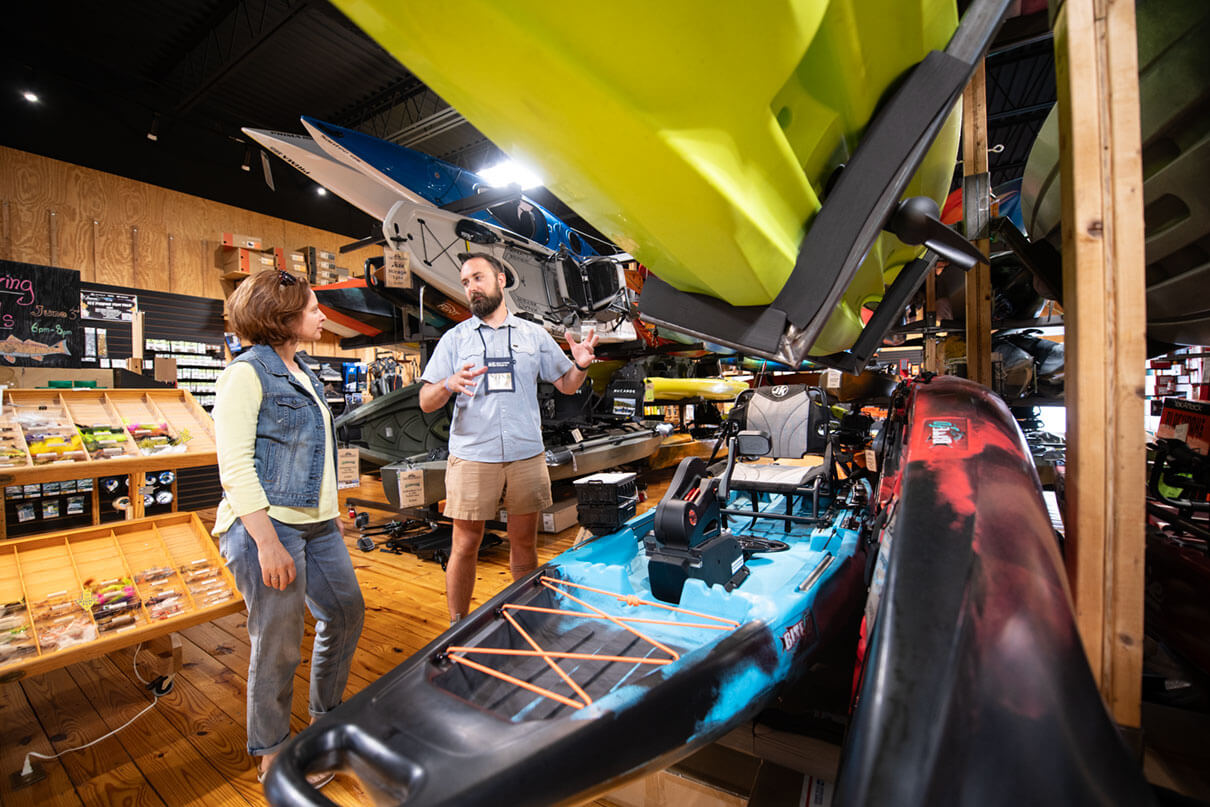
Once money talk is out of the way, the outfitters focus on fitting the kayak to the owner. Christianson and Lokey first ask where the customer plans to fish. Lokey explains, “If you are fishing in ponds, we go with a shorter, wider kayak for maneuverability and stability. For saltwater or large lakes, I recommend a longer, more seaworthy kayak.”